Buying a rental property in Mahopac or Carmel can look simple on paper. You see strong home values, rents in the mid-to-high $2,000s, and steady demand in a commuter-friendly area. But if you want the numbers to work, you need to look beyond rent estimates and focus on how each property can actually be used. Let’s dive in.
Why Mahopac and Carmel draw investors
Mahopac and the broader Town of Carmel sit in a market that is still mostly owner-occupied, which shapes how rental opportunities work. According to the U.S. Census Bureau QuickFacts for Mahopac, Mahopac has an 80.8% owner-occupied housing rate, while Carmel town is even higher at 85.4%. That means rentals exist, but they are not the dominant housing type.
That same data shows a median owner-occupied home value of $470,900 in Mahopac and $495,100 in Carmel town, with median gross rents of $1,931 and $1,683 respectively. Current portal snapshots suggest asking rents can be higher than those broader Census figures, which is helpful for investors comparing today’s listings to longer-term market patterns. The key takeaway is that this is not a high-volume rental market, but it can still offer opportunity when the property and strategy match.
Current rent and price picture
Recent market snapshots point to a relatively tight market with active pricing. Realtor.com’s Mahopac market summary shows a median listing price around $699,900, about 34 active listings, 56 median days on market, 6 rental properties, and a median rent near $2,700 per month.
Based on those current price and rent snapshots, a simple gross rent-to-price check comes out to roughly 4.6% for Mahopac before taxes, insurance, maintenance, vacancy, and financing costs. The same research suggests Carmel Hamlet may run closer to 6.1% on the same rough basis. That does not tell you actual cash flow, but it does show why purchase price discipline matters just as much as rent potential.
Long-term rentals are the clearest fit
For most buyers looking at investment property in Mahopac and Carmel, long-term rentals appear to be the most straightforward path. Current market snapshots show Mahopac rents around $2,700 and Carmel Hamlet around $2,800, which supports the case for year-round leasing rather than depending on short booking windows.
This matters because the area does not appear to have a deep surplus of rental inventory. In Mahopac, Realtor.com currently shows just 6 rentals, which supports the idea that legal rental units may be limited. In a market with high owner-occupancy and fewer rental options, a well-positioned long-term rental can be appealing, especially if it is commuter-friendly or offers flexible space.
Why long-term rentals may be more predictable
Long-term rentals usually involve fewer moving parts than other strategies. You are typically focused on lease terms, maintenance budgeting, and monthly operating costs rather than frequent turnover and intensive local compliance.
They may also line up better with local housing patterns. Since Mahopac and Carmel are not dominated by investor-owned inventory, the best opportunities often come from single-family homes, select condos or townhomes, and legally established accessory or multifamily setups where zoning allows them.
Seasonal lake homes need extra caution
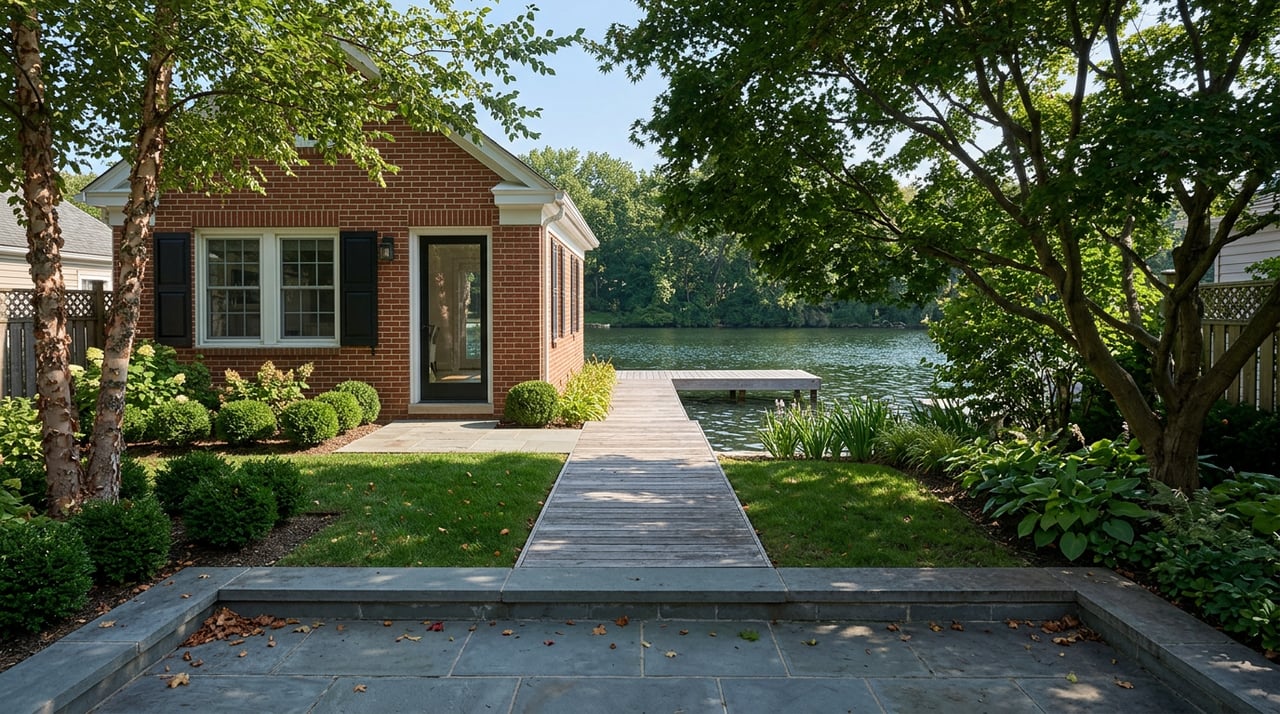
A lake-area property can be appealing if you are thinking about personal use plus rental income. But in Carmel, short-term rental rules are much stricter than many buyers expect.
Under the Town of Carmel zoning code, a short-term rental is defined as a single-family detached owner-occupied dwelling, or an accessory building on the same lot, rented in whole or part for no more than 14 consecutive days. A short-term rental also requires special use permit approval and site plan approval from the Planning Board.
What the short-term rental rules mean
The same zoning section adds several important limits:
- Maximum of four bedrooms for guest occupancy
- No more than two people per bedroom
- Minimum lot area of three acres
- No access from a private road only
- Required parking at the principal-use minimum plus one space per rented bedroom
- Town license and annual renewal required
- The Town Board may cap the total number of short-term rentals
For many buyers, that means a typical Airbnb-style plan is not a default strategy. If you are considering a seasonal or lake property, you may need to think of it instead as a second home, a longer furnished rental, or a property whose short-term use must be carefully confirmed before you buy.
ADUs and small multifamily can work
Accessory dwelling units and small multifamily properties can create useful income opportunities, but they are highly site-specific in Carmel. They are not a broad, one-size-fits-all option.
According to the Town of Carmel zoning code, ADUs are allowed only in LDR and MDR districts. The code limits a property to one ADU, requires the owner to live in the principal or accessory dwelling, sets a minimum ADU size of 400 square feet, caps detached ADUs at 650 square feet, limits ADUs to two bedrooms, and requires a building permit and certificate of occupancy.
Owner-occupancy is a major factor
That owner-occupancy rule is a big deal for investors. If your plan is to buy a property and operate it purely as a non-owner-occupied rental with an ADU, the property may not fit your strategy even if the structure itself looks ideal.
The town also requires proof that water supply and sewage disposal are adequate, with Putnam County Department of Health approval where applicable. Parking, inspections, and owner-occupancy verification are also part of the picture, and the permit can be revoked if standards are violated or inspections are refused.
Waterfront rules can limit upside
Waterfront and near-water properties often attract attention from buyers looking for rental potential. But in this area, those properties need careful zoning review because the redevelopment rules can be narrower than expected.
In the HMC zone, the Town of Carmel code states that single-family attached and multifamily dwellings are allowed only by special-use permit. It also says that no lot with lake frontage, or any lot within 100 feet of a lake’s mean high-water line, may be developed with dwellings without a use variance. Existing dwellings may continue, but additional dwellings on that lot are not permitted.
That can directly affect value-add plans. If your strategy depends on adding units, expanding density, or significantly repositioning a waterfront parcel, you need to verify what is legally possible before assuming future upside.
Financing can shape your returns
Even if a property rents well, financing can change the math quickly. Down payment, reserves, closing costs, and occupancy classification all matter when you are comparing an investment property to a second home.
The Consumer Financial Protection Bureau’s homebuying guidance explains that a 20% down payment typically helps you avoid mortgage insurance, while a smaller down payment usually means added monthly mortgage insurance costs. CFPB also notes that closing costs are often another 2% to 5% of the purchase price, before repairs, furnishings, or updates.
Cash reserves matter too
Lenders also look closely at reserves for second homes and investment properties. Fannie Mae’s reserve requirement guidance explains that reserves are measured in months of the qualifying PITIA payment, and additional reserves may be required when the subject loan is a second home or investment property.
That means a property with decent rent may still be a weak purchase if it drains too much cash at closing. Strong underwriting is not just about whether the payment fits. It is also about whether you still have enough liquidity after the purchase.
Occupancy type affects underwriting
If you expect to use the property yourself, financing rules may change. The CFPB’s Regulation Z commentary notes that credit for a non-owner-occupied rental property is treated as business-purpose credit, and if the owner expects to occupy the property for more than 14 days during the coming year, it cannot be treated as non-owner-occupied under that special rule.
For buyers looking at lake homes or part-time residences, this is important. A second home that is occasionally rented may be financed and evaluated differently from a pure investment property, so you want your purchase strategy, lender conversations, and zoning review to stay aligned.
How to evaluate a Mahopac rental property
The best next step is not a broad market guess. It is a property-by-property review.
Before you move forward, focus on these checkpoints:
- Confirm the zoning district
- Verify the intended rental use is allowed
- Check certificate of occupancy status
- Review septic and water capacity
- Confirm parking requirements
- Ask whether owner-occupancy rules apply
- Understand permit or special-use approval needs
- Match the financing plan to the intended occupancy
In Mahopac and Carmel, vacancy risk may have less to do with a lack of overall demand and more to do with whether a unit is legal, practical, and financeable. A property that works well as a long-term rental may not work as a short-term rental. A strong-looking ADU concept may fail if the lot, district, or owner-occupancy requirements do not line up.
The smartest investment angle here
If you are looking for the simplest path, long-term rentals generally appear to be the most investor-friendly option in Mahopac and Carmel. Seasonal use can be attractive, but it is much more regulated. ADU and small multifamily opportunities can make sense too, but only when the specific property supports that use.
That is why local guidance matters. A strong purchase here is usually less about chasing a headline rent number and more about making sure the property, zoning, financing, and exit strategy all work together. If you want help evaluating a potential rental, lake property, or owner-occupied income opportunity in Mahopac or Carmel, connect with Jenny Colon - for clear, data-informed guidance tailored to your goals.
FAQs
Is Mahopac a good place to buy a long-term rental property?
- Mahopac can be a workable long-term rental market because current rent snapshots are in the mid-$2,000 range and rental inventory appears limited, but each property should be reviewed for price, legal use, and operating costs.
Are short-term rentals allowed in Carmel, NY?
- Yes, but they are tightly regulated under the Town of Carmel zoning code and require specific approvals, owner-occupancy, lot size, parking, and licensing compliance.
Can you build an ADU for rental income in Carmel?
- Possibly, but only in certain zoning districts and subject to owner-occupancy, size limits, permit requirements, utility capacity, and certificate of occupancy rules.
Do waterfront properties in Carmel have extra zoning limits?
- Yes, lakefront and near-lake properties can face additional restrictions, including limits on new dwellings or added density without a use variance in certain zones.
What should you check before buying an investment property in Mahopac or Carmel?
- You should review zoning, permitted use, septic and water capacity, parking, certificate of occupancy status, owner-occupancy rules, permit requirements, and lender guidelines before making an offer.